


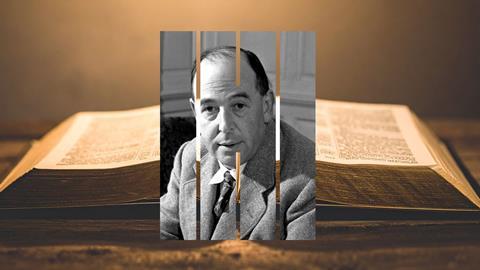
C. S. Lewis’s influence on Christian thought is undisputed - but was he truly a theologian, and did he always interpret Scripture well? In this lively conversation, scholars Leslie Baynes and Jahdiel Perez debate Lewis’s theology, his famous “liar, lunatic or Lord” argument, and the enduring power of Narnia to communicate faith beyond the confines of academic debate.
C. S. Lewis remains one of the most beloved Christian writers of the modern era. His books have introduced generations to Christian ideas through works such as Mere Christianity, The Problem of Pain and The Chronicles of Narnia. But was Lewis really a theologian, and did he always read the Bible well?
In this episode of Unbelievable?, host John Nelson is joined by C. S. Lewis scholars Professor Leslie Baynes and Dr Jahdiel Perez for a thoughtful and, at times, sharply contested discussion about Lewis, Scripture and the theology hidden within Narnia.
Perez argues that academic qualifications should not be the only measure of whether someone deserves to be called a theologian. “If religious communities around the world, hundreds, thousands of them, are accepting C. S. Lewis as a trustworthy theological voice, then for those communities, C. S. Lewis is a theologian,” he says.
Baynes broadly agrees, suggesting that the crucial question is “theologian for whom?” She adds: “For many, many people, C. S. Lewis is a theologian, and therefore he is a theologian for that community, no matter what the academic world might have to say about it.”
However, the discussion becomes more controversial when it turns to Lewis’s famous “liar, lunatic or Lord” argument. In Mere Christianity, Lewis argues that Jesus cannot simply be regarded as a great moral teacher. He must instead be understood as divine, dangerously deluded or something worse.
Baynes challenges the biblical basis of that argument. “Jesus does not go about saying that he is God,” she says, arguing that this claim is especially difficult to sustain from the Synoptic Gospels. “If Lewis is making an historical argument, he’s saying Jesus went about saying this. This is an argument from history.”
Perez pushes back, suggesting that Lewis’s argument may still possess force even if it needs strengthening. “This is just part of charitable interpretation,” he says. “You have an argument; maybe it could be formulated a little stronger, a better, more convincing way.”
The final part of the conversation explores Lewis’s fiction and why The Lion, the Witch and the Wardrobe continues to communicate Christian ideas so powerfully. Baynes points to the moment when the children first hear Aslan’s name and experience it as “good news”.
“Lewis is saying that at the name of Aslan, the children are being introduced to the gospel,” she explains. Yet Narnia is not simply an allegory. Perez says Lewis instead viewed it as a “supposal”: “Let’s suppose that Jesus was incarnate in a world of talking animals. What would that look like?”
This is a rich conversation for Lewis enthusiasts, biblical scholars and anyone interested in how stories can bypass our defences and awaken a fresh encounter with Christianity. Was Lewis a theologian, an inspired amateur or sometimes mistaken? Watch the full discussion and decide for yourself.
Check out the CS Lewis podcast with Ruth Jackson and also look out for a new video podcast of CS Lewis coming soon to Premier Unbelievable