



All Atheism articles – Page 2
-
 Article
When I was an atheist I made fun of Christian kids at school - now I ring them up to apologise
Harry Howard tells Premier Unbelievable how a surprising school lesson changed his mind about God, and why the church should try reaching young people with ancient forms of worship.
-
 Article
Who are the ‘New Atheists’ and are they right about God?
What caused the once-popular movement of militant atheists to develop, and are they correct to say that belief in God is dangerous and rational science is the answer?
-
 Shows
ShowsFree Will vs. Determinism: Who’s Really in Control?Alex O’Connor vs Prof Alex Carter hosted by Ruth Jackson
Are we the masters of our fate or just dancing to the universe’s tune? 🤔 This week on Premier Unbelievable, Ruth Jackson moderates a gripping debate on one of philosophy’s oldest questions: Do we truly have free will?
-
 Article
Atheism and the ignorance of science
Clinical Academic Ken Miles considers whether greater scientific knowledge could lead to a rejection of scientific atheism
-
 Shows
ShowsThe CS Lewis Podcast #169 James Emery White: Culture, translation and COVID-19
How did CS Lewis translate Christianity for ordinary people? What would he say to our post-Christian culture? Can Lewis help with evangelism? In what ways did people apply his ideas to the COVID-19 pandemic? Pastor, author and theologian Dr James Emery White explores how we can draw on Lewis in our modern context.
-
 Article
There’s a brand new argument for the existence of God: here’s a simple(ish!) explanation of the ‘problem of psychophysical harmony’.
Theism has been a hot topic in philosophy in recent years, and many academics now say there are very good arguments for the existence of God on the table.
-
 Shows
ShowsUnapologetic #111: Johan Erasmus: Is there more to life than atheism?
Afrikaner pastor Johan Erasmus shares the second half of his story. Why did the New Atheists’ arguments lose their appeal? How did the Bible become less embarrassing? Where does he turn with his doubts? In what ways does Johan’s faith inform his passion for racial reconciliation? Read more in Coming To Faith Through Dawkins.
-
 Shows
ShowsThe CS Lewis Podcast #164 Johan Erasmus: Coming to faith via Dawkins and Lewis
Following the death of his father as a child, Afrikaner pastor Johan Erasmus struggled to find a place where he could ask sceptical questions about faith, God and the Universe. During this time he discovered CS Lewis, but also Richard Dawkins, Sam Harris and Christopher Hitchens.
-
 Shows
ShowsUnapologetic #110 Johan Erasmus: Were the New Atheists right?
Following the death of his father as a child, Afrikaner pastor Johan Erasmus struggled to find a place where he could ask sceptical questions about faith, God and the Universe. During this time he discovered CS Lewis, but also Richard Dawkins, Sam Harris and Christopher Hitchens.
-
 Shows
ShowsThe CS Lewis Podcast #163 Matthew Brown: What would Sigmund Freud and CS Lewis discuss?
Hollywood director Matthew Brown, who directed and co-wrote Freud’s Last Session, shares his thoughts on two of the greatest minds of the 20th Century.
-
 Article
Women in apologetics – Not God’s type
Holly Ordway’s move from atheism to Christianity is reminiscent of CS Lewis’ conversion. Here, apologist Joel Furches tells her story and explores why she believes women play a crucial role in apologetics
-
 Shows
ShowsThe CS Lewis Podcast #162 Alister McGrath: Is there still a place for Lewis in today’s society?
We continue our conversation with Professor Alister McGrath answering live questions, including who influenced Lewis’ faith journey, whether there’s an expiry date on his relevance and how Lewis has impacted Alister’s own theology.
-
 Article
Can we have virtue without god?
Erik Strandness looks at where virtue comes from, exploring an Unbelievable show on the topic with atheist philosopher Julian Baggini and Christian author Dominic Done
-
 Article
Has religion ‘led us into all kinds of horror’ as actor Brian Cox argues?
Neonatal consultant Erik Strandness examines some of the comments Scottish actor Brian Cox recently made about God, the Bible and Christianity
-
 Article
Is atheism rational? How a physicalist atheist discovered Christianity
Mason Jones was convinced there was no phenomena that could not be explained apart from what’s physically observable. Here, researcher Jana Harmon described how Mason grew unsatisfied with the limitations of his atheism and discovered the rationality of a Christian worldview
-
 Article
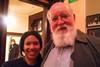
Goodbye to my friend Daniel Dennett 🫶: one of the 4 horsemen of New Atheism
Apologist Alycia Wood shares her personal reflections on Professor Daniel Dennett (1942-2024) following his death in April
-
 Article
Is atheism enough? How a militant atheist discovered Jesus in the military
Researcher Jana Harmon shares the fascinating story of how atheist Kyle Keltz began his journey towards Christianity while on guard duty in the Middle East
-
 Shows
ShowsUnbelievable? Is there as much reason to believe in an evil God as a good God? Max Baker-Hytch vs Asha Lancaster-Thomas hosted by Vince Vitale
In the discussion on the plausibility of an all-evil God versus an all-good God, Dr. Max Baker-Hytch delivered a compelling argument that encapsulated the essence of the debate. He highlighted the inherent scepticism that arises when considering the ‘evil God’ hypothesis, pointing out that if such a malevolent deity were to exist, it would provide ample reason to doubt the reliability of our cognitive faculties.
-
 Article
Atheism’s limits: How a sceptical neuroscientist rediscovered Jesus
Researcher Jana Harmon shares how neuroscientist Dr Rich Suplita found his New Atheism wanting, prompting him to look for answers in Christianity
-
 Shows
ShowsAsk NT Wright Anything #206 How do I share my faith with my New Age, Muslim and Atheist Friends? (Classic)
What happens to those who don’t believe in Jesus? What can I say to my New Age sister? My Muslim friend gets so much comfort from her faith… do I need to evangelise her? These and more listener questions get addressed by Tom Wright in this episode.