

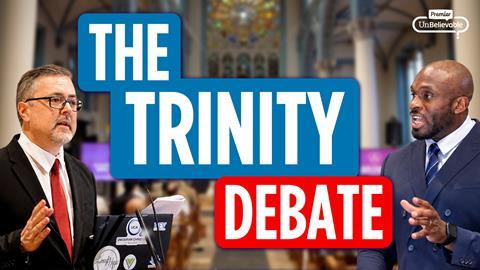
Did the early Church invent the Trinity, or formalise what the New Testament already taught? Dale Tuggy and Joshua Sijuwade debate what Scripture says about the Father, Jesus and the Holy Spirit - and whether the doctrine of the Trinity faithfully reflects the beliefs of the first Christians.
For nearly 1,700 years, the Trinity has stood at the heart of orthodox Christianity.
But did Jesus and the apostles actually teach it?
Christian Unitarian philosopher Dale Tuggy says no. He argues that the New Testament presents the Father alone as the one true God, Jesus as God’s uniquely exalted human Messiah and the Holy Spirit not as a third divine person.
“For me, this debate is about the clash between New Testament doctrines and incompatible later doctrines,” Tuggy says.
Joshua Sijuwade argues the opposite. He says the New Testament gives Jesus the names, actions, authority and worship associated with Israel’s God.
His key question is simple: On which side of the Creator-creature divide does Jesus stand?
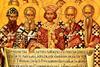
The debate also tackles the Holy Spirit, whether the Trinity implies three gods, the Council of Nicaea and why it took centuries for Christian doctrine to be formally defined.
At stake is a much larger question than theological terminology:
Did the Church clarify what the first Christians believed, or change it?