

Are your choices really yours? Or are you simply “dancing to your DNA”, pushed along by brain chemistry, upbringing and forces beyond your control?
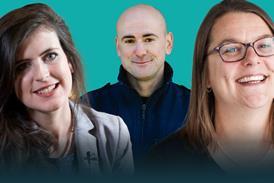
That was the central question in this lively and wide-ranging episode of Unbelievable?, hosted by Dr John Nelson, with two Cambridge-trained philosophers: Joe Folley, host of Unsolicited Advice, and Dr Nathan Hawkins, a Christian philosopher who defends libertarian free will.
The conversation began by setting out the three main positions in the free will debate. Libertarianism says that, at least sometimes, we genuinely could have done otherwise. Compatibilism argues that meaningful freedom can survive even if determinism is true. Hard incompatibilism, by contrast, says that if our choices are determined, or merely random, then free will collapses.
For Hawkins, libertarian free will begins with something very ordinary: our lived experience of choosing.
“It certainly seems to be the one that captures best our phenomenal experience of being the agent at the centre of our lives.”
When we deliberate, Hawkins argued, we do not experience thoughts as merely “popping into being”, as Sam Harris and other free will sceptics sometimes suggest. Rather, we weigh up possibilities: pizza or kebab, fish and chips or something healthier, one course of action or another. That process, he said, is not an illusion to be waved away.
A major flashpoint came when the discussion turned to neuroscience. Popular critics of free will often point to the famous Libet experiments, which appeared to show brain activity beginning before a person became conscious of deciding to act. For many online sceptics, this has become a knockout blow: your brain decides before “you” do.
Hawkins was not convinced.
“I don’t think we have any reason to say neuroscience therefore no free will.”
Folley also warned against placing too much weight on early neuroscience, noting that the field is still relatively young. He added that if we take physicalism or monism seriously, it becomes strange to talk as though “the brain” and “the person” are rival agents.
As he put it, we should be careful about saying:
“That wasn’t the person doing it, it was just their brain.”
If the brain is part of the person, then discovering brain processes behind decision-making does not automatically erase agency.
The debate became especially watchable when John raised Alex O’Connor’s popular challenge: either our actions are determined, or they are random. If determined, we are not free. If random, we are not responsible. Either way, free will seems impossible.
Hawkins pushed back sharply:
“It’s not a logical truth that everything is determined or random. It could only be a logical truth that things are either determined or not determined. Not determined does not mean random.”
This became one of the key moments of the conversation. Hawkins argued that indeterminacy need not mean chaos. It can mean “variation within constraints”, the kind of thing we see in evolution, where variation and selection work together. Our decisions, he suggested, may involve possibilities generated within limits, followed by evaluation, weighting and selection.
Folley, a compatibilist, was sympathetic to some of this but wanted to preserve a different point. Even in a deterministic world, he argued, we would still need to distinguish between willed and unwilled actions. Consent, responsibility, character, coercion, brain tumours, reflexes and deliberate choices all remain morally significant even if determinism is true.
His striking thought experiment was “Determinist Town”, where two people behave violently. One is later found to have a brain tumour; the other is not. Even committed determinists, Folley argued, would still treat those cases differently. Something about agency, character and responsibility survives.
“What relevant notions of freedom and will survive? What do we still want to be able to do under that universe?”
This was Folley’s compatibilist instinct: not necessarily to rescue every traditional idea of free will, but to ask what remains useful, humane and morally necessary once determinism is taken seriously.
The discussion then turned to moral responsibility. What about someone raised in a deeply racist household? Are they fully responsible for racist beliefs if they never had a genuine opportunity to think otherwise? Hawkins accepted that freedom is not limitless.
“If there genuinely was no possible live alternative option, then you are not morally responsible.”
But he also argued that moral responsibility often applies not simply to one isolated decision, but to the kind of person we become through repeated choices. We shape ourselves over time, through what he called:
“the sum total of the drip drip drip decisions and processes they’ve made in their life.”
Perhaps the most surprising moment came near the end, when Hawkins tried to persuade Folley that his own pragmatism might lead him closer to libertarian free will. If we cannot help but deliberate as though alternatives are genuinely open, and if our reasoning, inquiry and moral life all depend on that perspective, perhaps the experience of freedom is not so easily dismissed.
Folley admitted the challenge had force:
“If there’s literally no other way of processing the world other than by thinking of me from a first-person perspective as a being that could have done otherwise… then I think that does present a serious challenge for my view — at least in one case: the case of me.”
For a debate about determinism, the conversation ended with a surprisingly open question. We may be shaped by biology, upbringing, physics and culture. But are we merely products of those forces — or participants in shaping who we become?
Whether you side with libertarian free will, compatibilism or scepticism, this episode shows why the question is far from settled. And why, as Hawkins insisted, we should be cautious of anyone who tells us that science has simply closed the case.